
One Fabric, Many Products
I remember seeing how one strong denim base could become completely different products — different fits, different washes, different colours and finishes — but underneath, the fabric remained the same. That lesson has stayed with me. For buyers comparing sustainable denim suppliers, it's a useful question to ask upfront: can your supplier help you get more from one well-developed fabric, instead of developing a new base for every style?
The Base Fabric: 99% Cotton, 1% Elastane, Around 12.5oz
Take this as a working example. 99% cotton, 1% elastane, around 12.5oz — a base suitable for developing slim, regular, baggy or wide-leg styles across both men's and women's collections. Then the wash changes the story: dark indigo, vintage light, laser, ozone, tint, light distressing. One fabric suddenly doesn't look like one fabric anymore. Each fit and finish still needs proper testing, but the possibilities start with understanding the base fabric properly.
What Fabric Development Means in Denim
Denim development is the process of specifying, testing and approving a fabric before it is used in a range. It sets the weight, the yarn, the weave, the stretch and the dye, then checks how the fabric behaves when it is cut, sewn and washed. The aim is a base you can trust, so that the effort goes into styling and finishing rather than fixing the cloth. It is also the stage where mistakes are cheapest to correct, since changing a swatch costs far less than changing a bulk order.
Weight and Hand-Feel
Fabric weight, usually quoted in ounces per square yard or in GSM, shapes how a pair of jeans looks, drapes and wears. Lighter denim feels softer and suits shirts, summer styles and relaxed fits, while heavier denim holds structure and ages in a more defined way. The 12.5oz example above sits in the mid range, which is why it works across so many fits. Choose weight for the product, not by habit, and judge it on a washed sample rather than on the raw swatch. Our denim weight guide includes a conversion chart.
Weave and Construction
Most denim is a twill weave, in which the diagonal line of the weft passing over warp threads gives the fabric its familiar texture. Variations such as right-hand, left-hand and broken twill change the surface and how the fabric twists after washing. Yarn choice matters too: ring-spun yarns tend to give a more uneven, characterful surface, while open-end yarns are more uniform. Read our guides to denim weave types and ring-spun and open-end yarn for the details.
Stretch, Recovery and Comfort
Stretch is added with elastane, and even a small percentage changes how the fabric behaves. The 1% in the working example above gives comfort without losing the look of rigid denim, while higher levels suit skinny and women's styles but can affect wash appearance and long-term shape. What matters is not only how far the fabric stretches but how well it recovers, since poor recovery leads to bagging at the knee and seat. Test both on the actual fabric. See stretch versus rigid denim and cotton and elastane blends.
Dyeing: Where the Colour Comes From
Indigo is the classic denim dye and sits mostly on the surface of the yarn, which is why denim fades with wear and washing. Rope and slasher dyeing are the two common methods, and sulphur dyes are used for black and other shades. The depth of colour, the number of dips and the finish all decide how the fabric will wash down later, so approve dye and base shade together. Our guide to indigo dyeing and black denim explains the options.
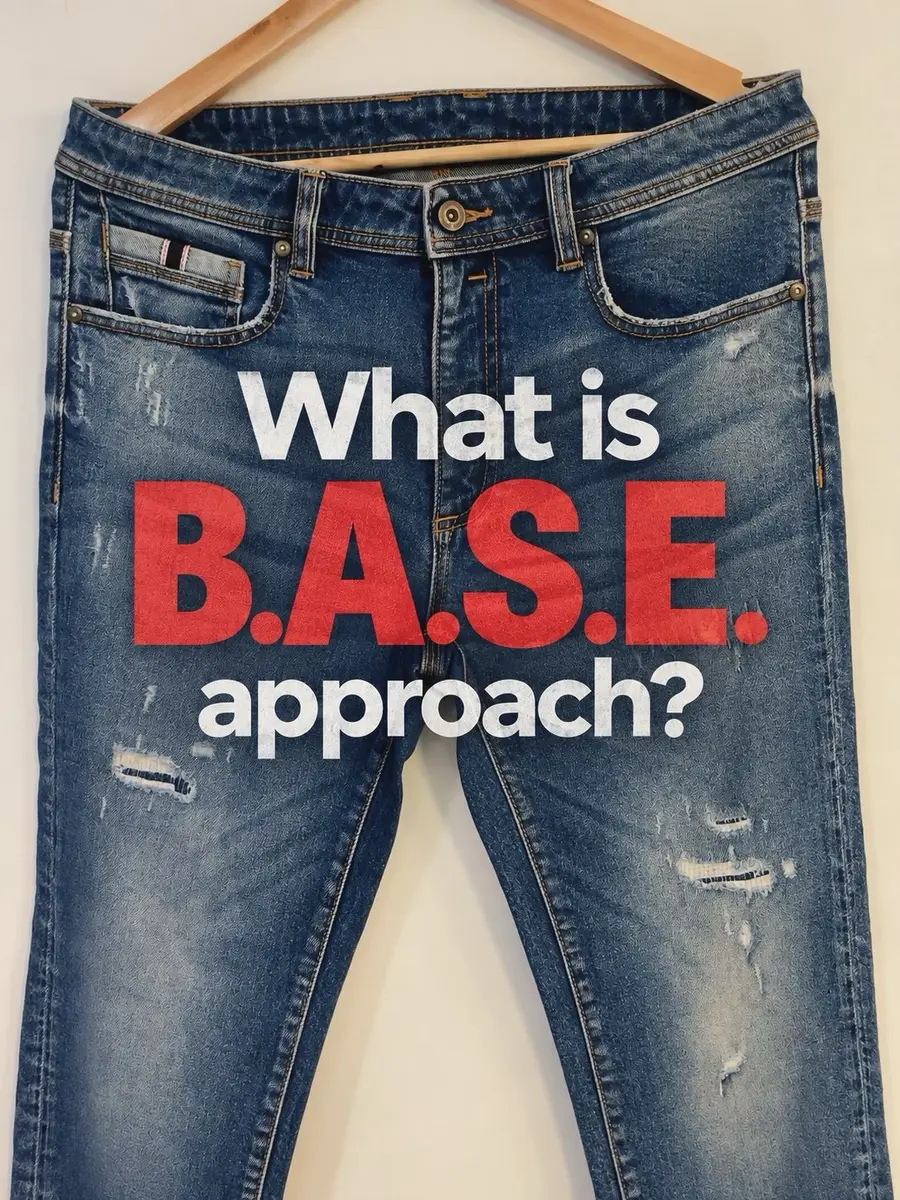
The B.A.S.E. Approach
This is why I like the B.A.S.E. approach as a practical framework:
B — Build one strong fabric base.
Get the core fabric right first: weight, stretch, hand-feel and durability, before multiplying styles from it.
A — Add different fits, washes and ideas.
Once the base is proven, develop variations across fit and finish rather than starting from scratch each time.
S — Start around 500 pieces per style and colour. Read the market.
A small, focused test order tells you which combinations of fit and wash actually sell, before you commit real volume.
E — Expand the winners to 5,000 or 10,000 pieces.
Put your production volume behind what's proven to work, with the fabric and wash recipe already validated.
From Base Fabric to Finished Wash
Once the fabric is approved, the same base can be taken through different finishes: stone or enzyme washes for a softer look, laser for whiskers and fading, ozone for a lighter tone using less water, and tints or overdyes for colour. Each recipe should be approved on a garment, not only on a swatch, because the shape of the garment affects how a wash develops. Keep a record of the approved recipe so a repeat can match it. Compare the options in our guides to denim washes and laser and ozone finishing.
Testing a Denim Fabric Before You Commit
A development fabric deserves proper testing. Typical checks are shrinkage and skewing after washing, colour fastness to rubbing (crocking) and washing, tensile and tear strength, and abrasion. Ask for results on the actual fabric lot, not a generic data sheet. Our guides to shrinkage and skewing, crocking and tensile, tear and abrasion testing go through what each test tells you.
A Typical Development Path
A common path begins with a brief covering weight, composition and the end use. The mill or supplier proposes one or more base options, and swatches are reviewed for hand-feel and colour. A washed sample is made up as a garment, fit and finish are adjusted, and test results are checked. Only then is the fabric approved for bulk. Timelines depend on whether the fabric is stocked or woven to order, so ask early. See our denim production lead time guide and denim fabric MOQ guide before you plan a launch date.
Sustainability Checks on a Denim Base
Development is also the moment to ask environmental questions, because they are much harder to change later. Ask where the cotton comes from and whether a certification such as organic, recycled or Better Cotton is claimed and documented, how the mill treats its water and chemicals, and what finishing processes the wash will need. Request the supporting paperwork rather than a verbal assurance. Our guides to denim certifications and water use in denim production explain what to look for and what to ask.
What to Ask Sustainable Denim Suppliers About Repeat Consistency
When choosing sustainable denim suppliers, ask about repeat consistency too: can they reproduce the approved wash, maintain the fit, and secure the fabric when you need to reorder? Development matters, but so does delivery once a product actually works in the market.
For denim buyers, there's a bigger benefit to this approach. You can concentrate fabric volume instead of spreading it across multiple bases. You learn how that fabric behaves, how it washes, how it performs — and if it keeps delivering, you may not need to replace it next season. Keep the base, change the story.
One Fabric Alone Doesn't Prove Sustainability
But one fabric alone doesn't prove sustainability. When comparing sustainable denim suppliers, ask for traceability and measured evidence behind environmental claims — low-water eco wash processing such as laser, ozone and e-flow/nano-bubble finishing should be backed by actual process data, not just the presence of the equipment. The fabric matters. The processes behind it matter just as much.
Practical Questions Before You Commit a Denim Programme to One Base
Before concentrating a season's volume around a single base fabric, it's worth confirming a few things directly with the mill and the manufacturer. Is the fabric stocked, or does it need to be woven to order — and what lead time does each option carry? What is the minimum fabric commitment per colour or finish, and does that match your planned order structure across the B.A.S.E. stages? How is shade consistency managed across dye lots if a reorder happens months after the original? These aren't exciting questions, but they're the ones that determine whether "keep the base, change the story" actually holds up once a style moves from a 500-piece test into a 5,000 or 10,000-piece repeat order.
Common Denim Development Mistakes
The usual mistakes are approving a fabric on the swatch alone, changing yarn or mill between sample and bulk, ignoring skewing until the first wash, choosing too many bases in one season and losing the benefit of volume, and failing to record the wash recipe. A disciplined, single-base approach avoids most of them, and it is what the B.A.S.E. framework above is designed to protect.